Recommended camera settings#
Focal length needed to frame it#
For a subject about 13 cm long filling a third or half of the frame width horizontally. Small birds demand long lenses and a close approach — a blind or feeder setup helps.
| Distance | ⅓ of frame (FF) | ½ of frame (FF) | ⅓ of frame (APS-C) | ⅓ of frame (MFT) |
|---|---|---|---|---|
| 5 m (16 ft) | 419 mm | 608 mm | 279 mm | 209 mm |
| 10 m (33 ft) | 837 mm | 1,216 mm | 558 mm | 419 mm |
| 15 m (49 ft) | 1,256 mm | 1,824 mm | 837 mm | 628 mm |
| 20 m (66 ft) | 1,675 mm | 2,432 mm | 1,116 mm | 837 mm |
| 30 m (98 ft) | 2,512 mm | 3,649 mm | 1,675 mm | 1,256 mm |
| 50 m (164 ft) | 4,187 mm | 6,081 mm | 2,791 mm | 2,093 mm |
About the Hooded Warbler#
The hooded warbler (Setophaga citrina) is a New World warbler. It breeds in eastern North America and across the eastern United States and into southernmost Canada (Ontario). It is migratory, wintering in Central America and the West Indies.
Summary adapted from Wikipedia via iNaturalist (CC BY-SA 4.0).
Field-craft tips#
- Spring migration (late April–May) is peak season.
- Learn songs to locate birds before you see them.
- Shoot at the canopy edge where light reaches the leaves.
- Use a small flexible zone or animal-eye AF; tiny birds flit constantly, so shoot short bursts.
- Sightings peak in April and May, which is when you'll have the most chances.
- Tiny subjects: get close with a hide or feeder perch rather than cropping heavily.
Ethics#
- The welfare of the animal comes first: if it changes its behaviour because of you, you are too close.
- Stay on trails, respect closures around nests, leks, dens and haul-outs.
- Avoid playback and baiting in sensitive seasons; never bait predators.
- Don't share precise locations of rare, nesting or roosting animals publicly.
More New World Warblers#
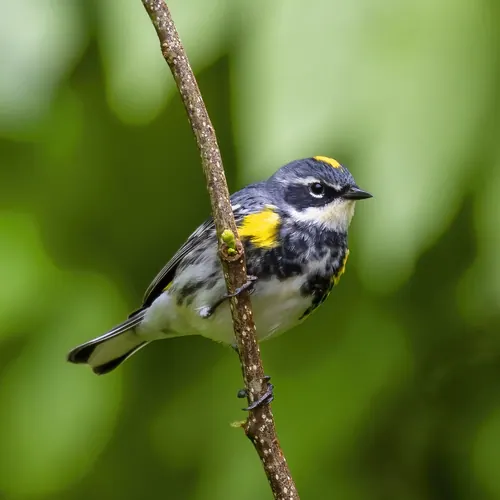 Yellow-rumped WarblerSetophaga coronata
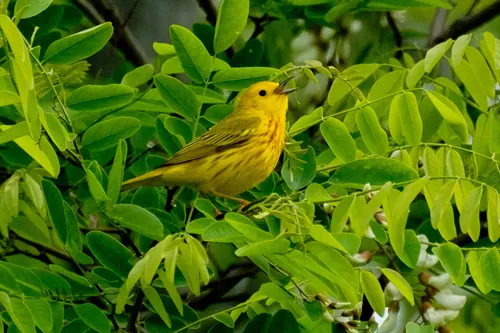 Northern Yellow WarblerSetophaga aestiva
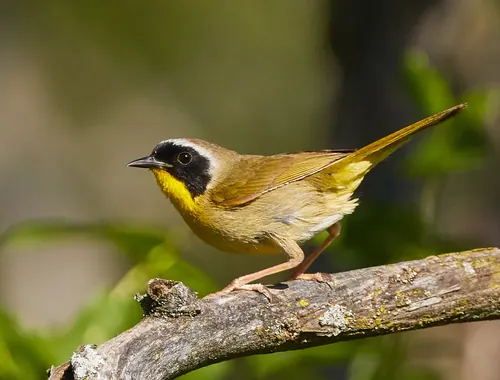 Common YellowthroatGeothlypis trichas
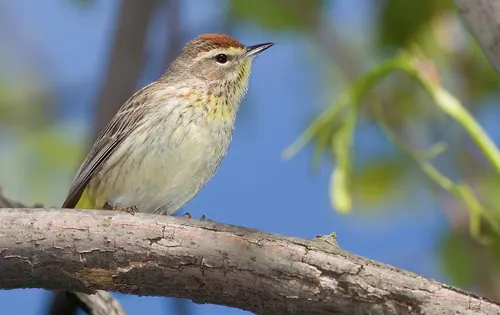 Palm WarblerSetophaga palmarum
Orange-crowned WarblerLeiothlypis celata
Palm WarblerSetophaga palmarum
Orange-crowned WarblerLeiothlypis celata
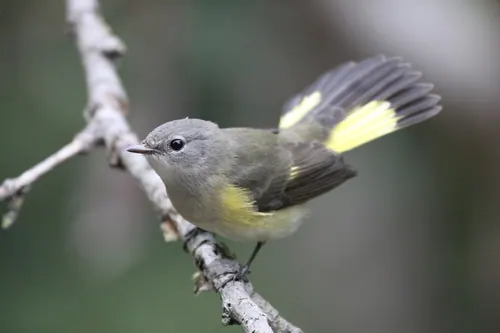 American RedstartSetophaga ruticilla
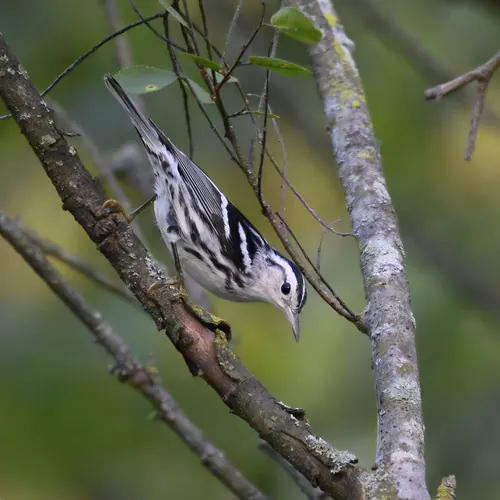 Black-and-white WarblerMniotilta varia
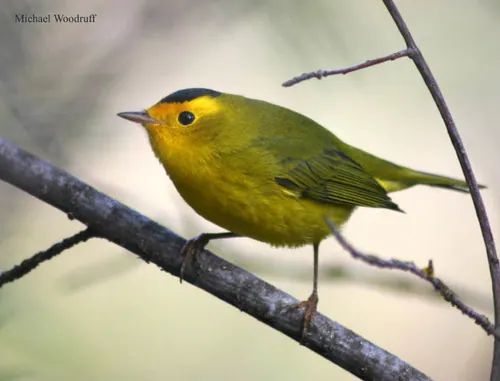 Wilson's WarblerCardellina pusilla
Frequently asked questions#
What lens do I need to photograph a Hooded Warbler?
At about 13 cm long, a hooded warbler fills a third of a full-frame image at 10 m with roughly 837 mm, or at 20 m with 1,675 mm.
What shutter speed should I use for a Hooded Warbler?
1/1000 s when it's still; 1/3200–1/4000 s for action.
When is the best time to photograph a Hooded Warbler?
Observations in North America peak in April and May. Early morning and late afternoon give the best light and activity.
Sources & licences#
- iNaturalist — Observation data CC BY-NC; photo licence as credited
- Wikipedia — CC BY-SA 4.0
Last updated October 03, 2026 · How we calculate · Sources