Recommended camera settings#
Focal length needed to frame it#
For a subject about 105 cm long filling a third or half of the frame width horizontally.
| Distance | ⅓ of frame (FF) | ½ of frame (FF) | ⅓ of frame (APS-C) | ⅓ of frame (MFT) |
|---|---|---|---|---|
| 5 m (16 ft) | 56 mm | 84 mm | 37 mm | 28 mm |
| 10 m (33 ft) | 112 mm | 169 mm | 75 mm | 56 mm |
| 15 m (49 ft) | 168 mm | 253 mm | 112 mm | 84 mm |
| 20 m (66 ft) | 224 mm | 337 mm | 149 mm | 112 mm |
| 30 m (98 ft) | 336 mm | 506 mm | 224 mm | 168 mm |
| 50 m (164 ft) | 559 mm | 843 mm | 373 mm | 280 mm |
About the Coyote#
The coyote (Canis latrans); from Nahuatl pronunciation (help·info)) is a canine native to North America. It is smaller than its close relative, the gray wolf, and slightly smaller than the closely related eastern wolf and red wolf. It fills much of the same ecological niche as the golden jackal does in Eurasia, though it is larger and more predatory, and is sometimes called the American jackal by zoologists.
Summary adapted from Wikipedia via iNaturalist (CC BY-SA 4.0).
Field-craft tips#
- Fox dens in spring — use a long lens and limit visits.
- Dawn and dusk activity means high ISO — prioritise shutter speed and accept some noise.
Ethics#
- The welfare of the animal comes first: if it changes its behaviour because of you, you are too close.
- Stay on trails, respect closures around nests, leks, dens and haul-outs.
- Avoid playback and baiting in sensitive seasons; never bait predators.
- Don't share precise locations of rare, nesting or roosting animals publicly.
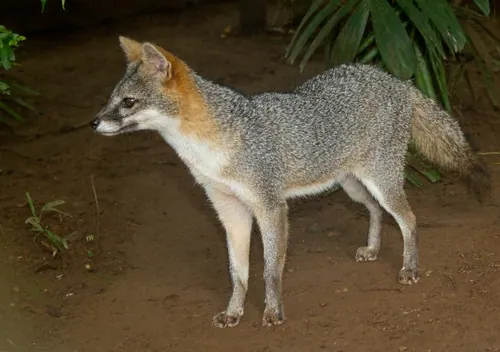
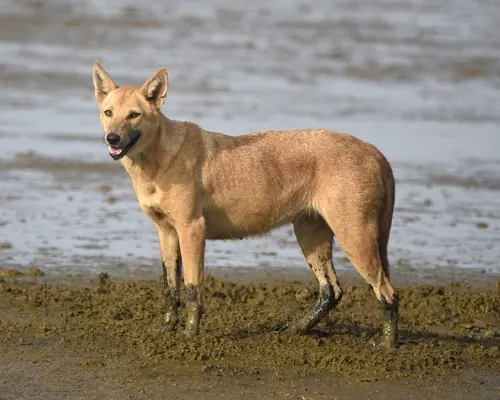
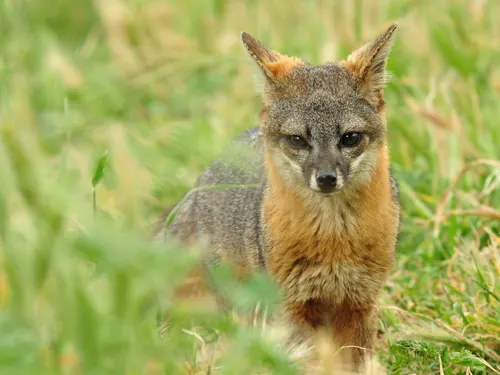
More Canids#
Frequently asked questions#
What lens do I need to photograph a Coyote?
At about 105 cm long, a coyote fills a third of a full-frame image at 10 m with roughly 112 mm, or at 20 m with 224 mm.
What shutter speed should I use for a Coyote?
1/500 s when it's still; 1/2000 s for action.
When is the best time to photograph a Coyote?
Observations in North America peak in January, February, March, April, May, June, September, October, November and December. Early morning and late afternoon give the best light and activity.
Sources & licences#
- iNaturalist — Observation data CC BY-NC; photo licence as credited
- Wikipedia — CC BY-SA 4.0
Last updated October 03, 2026 · How we calculate · Sources